
Issues
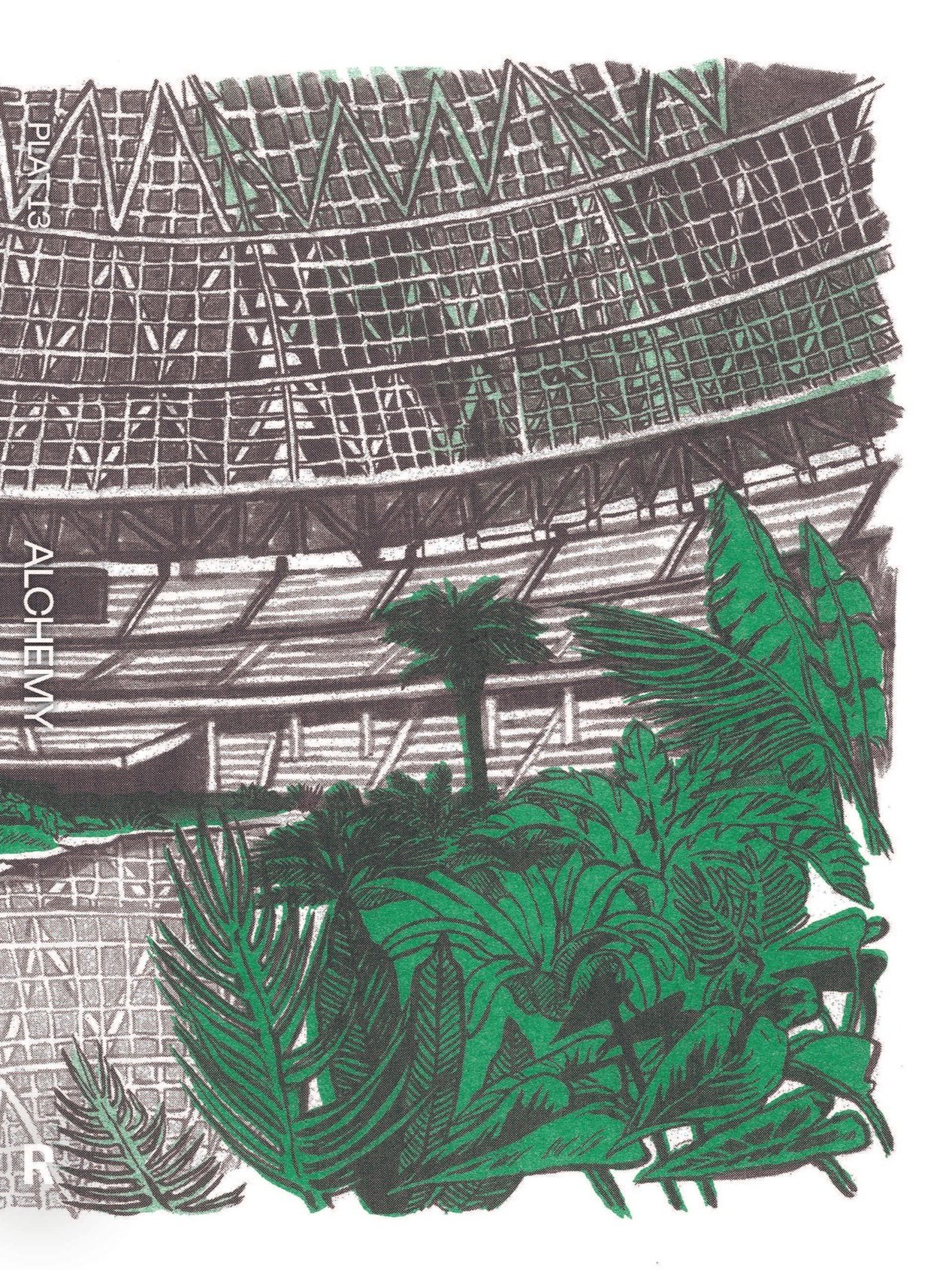
The problems society faces today are extreme—including climate change, exploitive economic conditions, and a rapidly shifting technological landscape. Amid this disorienting and rapid change, we will need a form of optimistic thinking about how to transform society.
This issue of PLAT highlights several different approaches, phases, and scales of how change is present in design, from systems-based thinking at a planetary scale to the individual’s perspective of the city. Every step in the design process is represented within this issue, including the identification of a needed transformation, detailed designs that are specific to place, and broad theories of change and development.
We, as architects, designers, students, professionals, and individuals, ought to engage the world constantly thinking about how we can use the alchemical processes of architecture to transform the spaces in which we live.
With the following contributions:
The Exchange Anatomy - RaRe Design Lab
Social Urbanism - María Bellalta
Re-Forest - Luciana Varkulja
Confluencing - Hala Nasr
Inter – Infra - Lei Tang
Out Standing in a Field - Nate Ehrlich
Crack Ecology - Kirst Willis & Kathryn Morgan
Songyang Story - DnA_Design & Architecture
Approach - Mariam Issoufou
Autistic Architectural Approach - Troels Steenholdt Heiredal
Hong Kong's Spatial Duality - Mingru Han
The Invisible City - Sharon He, Caitlin Wong, & Simone Cao
An Architectural Kafala - Adrian Fernandez
The Toll of Unlimited Speed - Megan Kimble

To divine is a vehicle whereby the field of architecture can manifest diverse places of difference and reconstruct narratives of the past, present, and future. From the most religious to the most secular, from the mystical to the ordinary, from the individual to the collective, the intertextual links in this volume orchestrate a journey that unfolds in three acts: divinings, divinations, and divinizations.
In the first act, the diviners dissect the meaning of the word “divine” itself. Their meditations on ethereal concepts reveal parallelisms with the practice of architecture. These ruminations eventually wrestle with the realization of ghastly profanities—even the divine cannot escape commodification. Against this disconcert arises a collective desire for the reclamation of meaning. The search for resolve in our material and tectonic cultures vis-à-vis this capitalistic milieu immerses us into a journey within.
In the second chapter, diviners excavate meanings and processes for architectural futures and worldbuilding from various sources: faith, pop culture, traditions, and shit. Building into this interface to divinize the profane and to profane the divine, they yield fertile ground for cultural critiques on the deceptive desires we have come to uphold as sacralities.
The third act explores the calcification of humanity’s derailed priorities into the absolutist religion of global capital, and the subversive determinations to recover virtues worth celebrating. They show that the delight of meaning may coexist in spite of, within, and around mounds of commodification. Throughout these acts, encounters with spaces, words, and bodies reveal new parts of an infinite waiting to be divined
Co-Editors: Maximilien Chong Lee Shin & Tasiana Paolisso
Team: Alice Bian, Luke Blair, Elina Chen, Andy Entis, Sarai Huamán, Andrew Jiao, Kexuan Shang, Elliot Yamamoto, Juchen “Ignis” Zhang
With contributions from:
Igor Marjanović—Timeless and Timely
Maximilien Chong Lee Shin & Tasiana Paolisso—diviners divining divine
Jake Deluca—Echoes of Divine Nemesis
Stephanie Choi—Worlds Within : A visit to the Menil’s Witnesses to a Surrealist Vision
Amir Halabi + Christopher Sanders—Which Afterlife? Transmigration and a Pause from Binaries
Evan Pavka—“The Girls” and Their “Church”
Vivien Sansour—Seed as Vessel
Civil Architecture—Sunpath, Rajab to Shawwal 1444
Brendon Carlin & Maria Paez Gonzalez—Architecture without Categories : On Divine Economy and Sympathetic Magic
Carlos Jiménez—In Search of the Divine
Besler & Sons—Screen Fatigue
Sabrina Chou—Divining the Sewer
Kordae Jatafa Henry—Monster
Lesley McIntyre—Artifacting Geomythology in Rútshellir
Léo Figuet & Telmo Escapil-Inchauspé—Katechon : A State (of Exception) of European Architecture
Tsuyoshi Tane—Old as New : Archaeology of the Future
Khoa Vu—Grayscale : Architecture of Fog
Sumayya Vally—Gathering Home
Ece Duran & Oğul Can Öztunç—Reimagining Everydays of Divine Space with Taksim Mosque
Kyle Dugdale—Divine Office
Alex Yueyan Li & Will Fu—Outlet Fervor
Timothy Wong—Making Sacred : Underground Suburban Homes in Postwar America
WAI Architecture—Think Tank Monument to the Victims of Capitalism
Jeffrey Zhenhua Liu & Haylie Chan—Woven Veil 團結
Rachel Chapman—Sk8 Liborius
Anoushka Mariwala—Larger than Life : Ritual Performance in Mumbai’s Ganesh Chaturthi
242 pages, published Spring 2024.
If you encounter any issues during checkout, please email us: editor@platjournal.com.
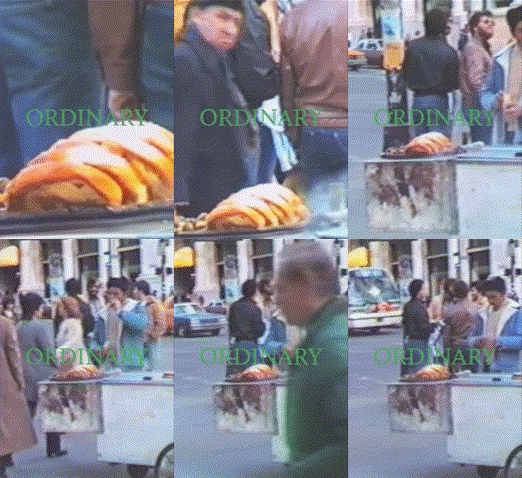
It’s difficult to understand the concept of ordinary without a specific subject attached to it. Ordinary…what? What do we mean when we describe something as ordinary? Does ordinary necessitate a positive or negative connotation, or can it be neutral and foreground shared familiarity? How does one qualify an adjective that describes merely anything and everything? For some, ordinary is consistent reappearance over long periods of time; but for others, ordinary means fast readjustment to new realities. There is not an inclusive definition of ordinary because it is subjected to unique cultures and experiences.
In the eyes of Martin Heidegger, the subject-object duality of our existence and our thoughts is not inherently in opposition with each other but rather co-exists as a unified body. This provides us a tangible framework for understanding the ordinary because everydayness often supersedes our conscious states of being. In the architectural context, a pencil helps us communicate design ideas on paper but rarely do we scrutinize its compositions and materials. It is so easy to neglect the ordinary because humans are constantly caught up in the drift of chasing time that it seems preposterous to reflect on the habitual.
In the Ordinary issue of PLAT, we invite you to take a second to appreciate our everydayness. Momentarily, you will read about different architects constructing the ordinary from various parts of the world and potentially stumble across a dust mountain, a wood frame house, or even a playful tumbleweed. For a short reading pause, you can flip through a street photography book or take a stroll through a sculpture exhibition. We wish you a pleasant read.
Editorial Team
Editor-in-Chief: Andrew Jiao
Team: Maximilien Chong Lee Shin, Tasiana Paolisso, Andy Entis, Elliot Yamamoto, Elina Chen, Alice Bian, Sarai Huaman, Jiaye “Jessie” Li, Juchen “Ignis” Zhang, Luke Blair, Bailey Stevens, Chance Stevens, Maxwell Stith, Jeremy Thorn.
With contributions from:
Allyson Vieira—RE: Work Over Time
Brittany Giunchigliani—THE SEAWEED KNOWS NO SONGS
Emanuel Christ & Victoria Easton/Christ & Gantenbein—Typology of the Ordinary
Gwendolyn Cohen—The Stories of Maintainers
Kate Bilyk—Returning to the Neighborhood
Kelly Hendrik /B-ILD—Common Craftsmanship
Li Hu /OPEN Architecture—An OPEN Conversation with Li Hu
Paul DeFazio—Ideal, Average Bodies
Reese Lewis—A Dust Atlantis: Chat Mountains and An Architecture of Ecological Defamiliarization
Sarah Aziz—Humbleweeds
Ambrish Arora /Studio Lotus & Troy Schaum—No [Applicable] Skills: Nimble Practice in Formation
Umberto Napolitano /LAN Architecture—From Non-Specific Spaces to Specific Cities
PLAT 11: Soft
Where do we begin when we start to talk about architecture? Perhaps with an idea for a building: an office tower, a public library, a secluded garden. We could begin with a drawing, the moment an idea becomes defined, or further, with a set of drawings, where rooms and the assemblies of walls, floors, and roofs give a building its shape through hard lines and planar geometry. We could look at how building materials come to fit these lines: where stone is quarried and cut, how sand is mined and annealed to produce glass, or clay pressed and fired into brick. We could begin with the protocols, procedures, and formalities which we use to partition land and begin construction.
In all of these images, we can find hard boundaries and separations– from the conventions of our drawings, to the way we prepare materials, to the conceptual boundaries of the practice: notions of territory, codes of conduct, what is included, and just as importantly, what is not.
What might it mean for architecture if these lines and boundaries were softened?
“Soft” as a quality can evoke many things: materials, light and atmospheres, touch and craft, a fuzzy boundary, a soft-focus image, landscape and ecology, gentleness, reciprocity in relationships. Our provocation for PLAT 11 is to search for softness in architecture, to engage with the ground and atmosphere, to question its mass, its mark, its permanence. Soft is a quality of material things, of touch, of sounds, of sights, of words, of time. PLAT 11: Soft asks,
How often have our efforts to describe the limits of architecture, limited the capacity architects have to enter into relationships with others? What might it mean for architects to speak softly? What does it look like when we redefine the boundaries of buildings, or push back against easy claims of permanence? Could we shift our focus from producing the built environment to caring and attending to it?
PLAT 11: Soft explores these questions, and begins to ask new ones.
Co-Editors: Jane van Velden + Paul DeFazio
Team: Rae Atkinson, Jimmy Bullis, Joseph Hsu, Nathaniel Garone Leazer, Taylor Li, Maggie Martin, Maximillien Lee Chong Lee Shin, + Nicole Yip
With contributions from:
Igor Marjanovic—Dean’s Foreword: Soft Lines
Irénée Scalbért—Really Good
Sarah Wigglesworth—Leadership with a Soft Center
Jane Mah Hutton—In Conversation with Sarah Nichols
Figure—Practicing Softly
Jorge Otero Pailos—In Conversation with PLAT
Robin V. Hueppe—Shattered Dreams, Sleeping Visions
Gustav Düsing—In Conversation with Dehlia Hannah
Hélène Frichot—A Soft On for Caring Relationships
Rafael Beneytez-Durán—Air: A Field of Intense Materiality
Oscar Tuazon—In Conversation with PLAT
Ellen Lesperance—Velvet Fist
Dept.—Pruning a Fence, Growing a Grid, Eroding a Monument
SONNENZIMMER—Carrier Shell: Shallow Atmosphere
Soft Agency—Soft Agency
Nathaniel Leazer—Soft Control
Jordan H. Carver—Soft Targets
Ann Hamilton—Between Paper and Cloth
Hilary Sample In Converstion with PLAT
Leyuan Li—Mirror, Mirror On the Wall
Lydia Kallipoliti—Soft Machines
Galo Canizares—In Conversation with PLAT
Frani O’Toole—Universal Design Standards
Departamento Del Distrito—When Models are Systems
Jos Boys—In Conversation with PLAT
Practice Landscape—Two Projects in Captiva
Janine Antoni & Joey Orr—We Listen With Our Steps, The Land Speaks
DAVIDSON RAFAILIDIS—Small Shack, Soft Eyes
Elizabeth Bynum Sorrell—Noise, Nightclubs, and Neighbors
LANZA Atelier—A Table for Hundreds
Harish Krishnamoorthy—Post-Mortem Wanderings
Yejin Stefany Lee—In Conversation with PLAT
Paul DeFazio + Jane van Velden—Editor's Conversation
256 pages, published Fall 2022.
If you encounter any issues during checkout, please email us: editor@platjournal.com.
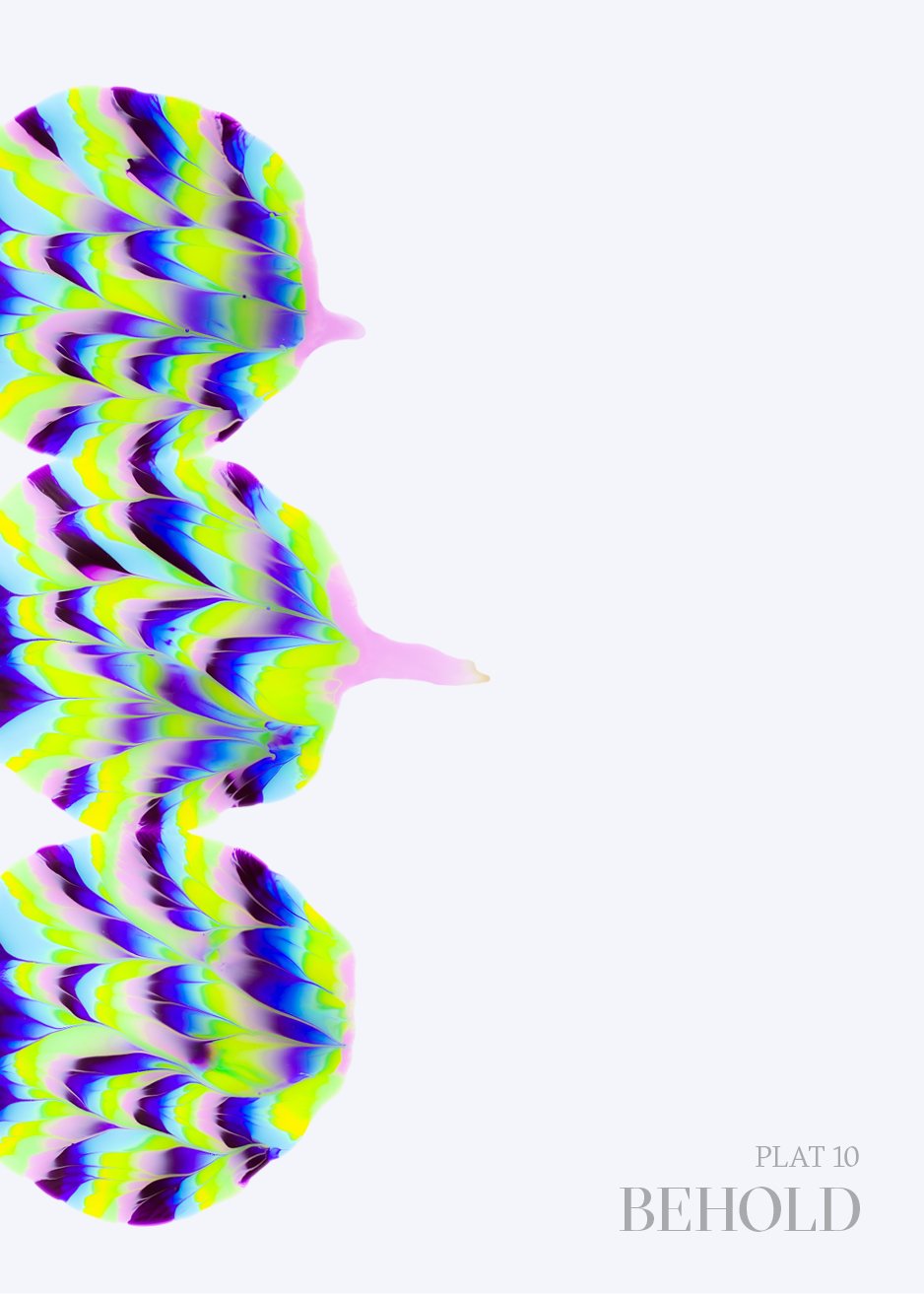
In a capitalist society where even spatial effects are commodified, providing desirable user experiences to potential consumers threatens to eclipse all other aspirations. If the intention behind a work is only to provoke the interest of a consumer, interpretation of it as something other than a commodity is impossible. Positioning user experience as the sole concern of architecture risks relinquishing its capacity to carry an independent meaning.
PLAT 10 speculates on the significance of a parallel audience distinct from the user: that of the beholder. The former implies experiencing an architectural object. The latter involves interpreting the intentions embedded in said object. To use architecture means to engage only with the physical existence of a work; to behold it considers a built work as the conveyor of ideas. If a project acknowledges and engages with this distinction, it can begin to resist its commodification. This aspiration may seem naively heroic, but does architecture have a choice? How can it uphold a status as an active agent in society while being constantly subsumed by the market?
The decentering of user experience recalls the project of autonomy explored extensively in the seventies and eighties. In his introduction to the Oppositions Reader, Michael Hays claims that architecture’s autonomy is “its self-organization into a body of formal elements and
operations that separates it from any particular place and time.” But architecture’s presence in public is imminent and significant—by ignoring its status as a commodity within a larger system, these efforts failed to address the reality in which it necessarily exists—a reality built on individualism and inequality, which left unchecked grows increasingly difficult to challenge. The apathy inherent in “separating architecture from any particular place and time” amounts to tacit approval of current conditions.
Is there a way to instead suspend commodification without denying its presence in what we do? Can there be autonomy from market forces without an ignorance of the real world? By positioning using and beholding as two parallel yet distinct poles, might there be a way to curate a user experience and engage with broader issues without compromising either endeavor? How does the recognition of the beholder alongside the architect and the user affect the overall dynamic? How can a building address a public beyond its users?
Contributors to this issue approach this idea from a varied range of perspectives. From the relevance of captions and narrative in photography to dwelling policies in England, from the role of the critic and the skeptic in creative fields to activist projections in Brazil, and from the viability of producing architectural meaning to the prospect of architecture after architecture, the articles of PLAT 10 circle these questions in an open-ended manner to produce a conversation that doesn’t limit itself to one definition of the architectural discipline.
Throughout the issue, architects, art historians, critics, and educators speculate on the potentials of framing architecture as a medium for producing and conveying meaning. We hope PLAT 10 serves as a way of challenging the elitist legacy in the question of what it means to behold a work of architecture.
Editors-in-Chief
Jimmy Bullis
Pouya Khadem
Managing Editor
Jane Van Velden
Design Director
Adam Berman
Editing Director
Harish Krishnamoorthy
Development Director
Elina Chen
Collaborative Editors
Paul DeFazio
Jeremy Harrienger
Joseph Hsu
Nathaniel Leazer
Lauren Philips
Layout
Lindsey Chambers
Paul DeFazio
Elina Chen
Joseph Hsu
Social Media
Sebastián López Cardozo
Cover Artwork
Curtis Roth
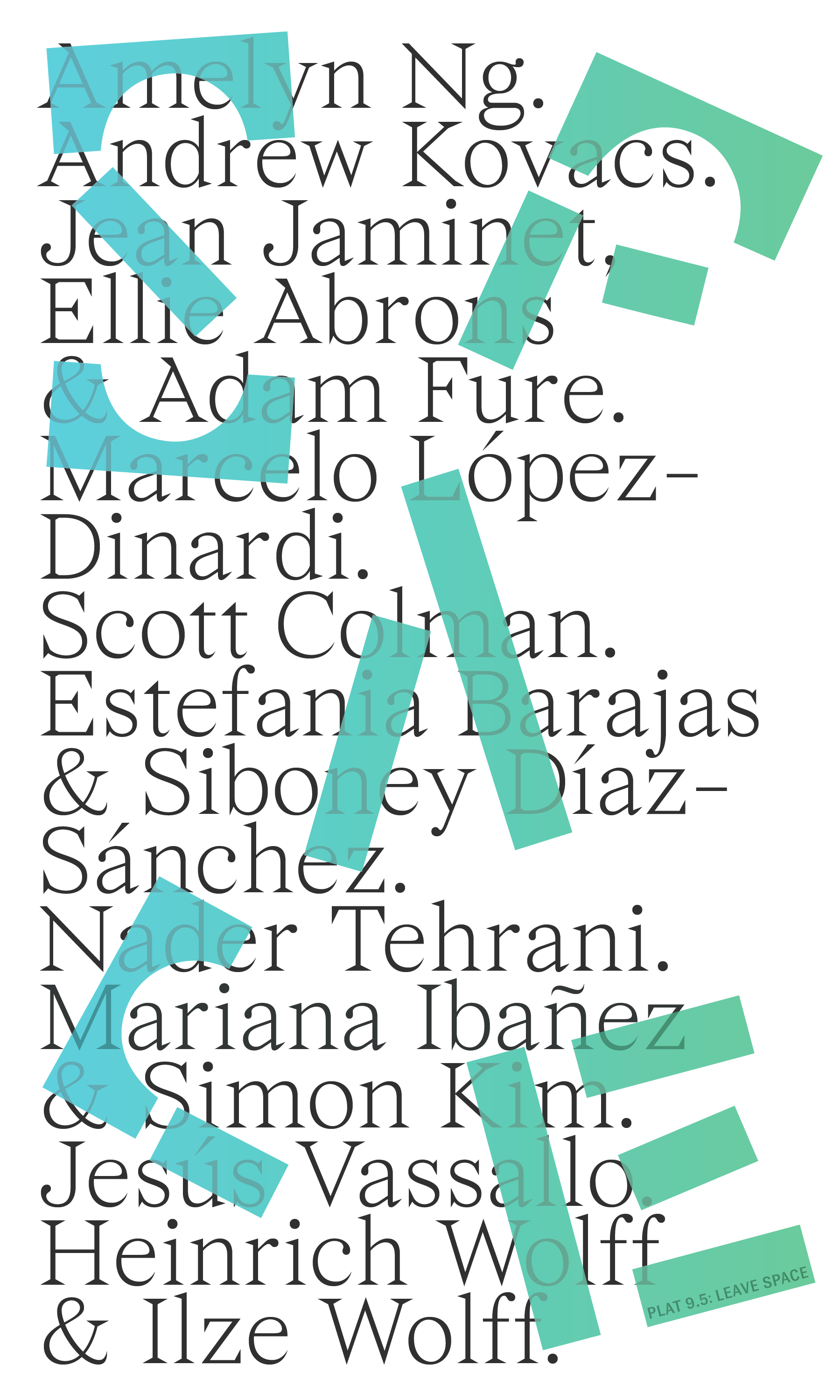
PLAT 9.5: Leave Space is presented digitally on our website for free. Use this page to purchase a copy of the promotional poster. The poster is double-sided and measures approximately 16.5” x 10.5”. Update: posters are sold out.
Searching for a response to our last theme, Commit, we ran into something of a roadblock. Any attempt to take a stance—even a stance of doing nothing—can be wrapped up into this act of commitment posed as some kind of totalizing ethos. There is no space even to respond.
So, in part we respond to this act of encompassing all attempts at action and inaction alike, and in part we respond to the term itself. PLAT 9.5: Leave Space questions the idea of the architect as one who always knows what’s best. It promotes humbleness and asks if architects might take a step back rather than always seeking out the foreground. It seeks the creative potential in the inevitable distance between architect and architecture. A building results from a complex interaction between forces at different scales, from socio-political conditions to community development initiatives, from the involvement of non-humans to the relationships between architects, engineers, and laborers.
But we do not wish to be prescriptive. We think of Leave Space less as a theme to be upheld and more as an entry point, and we’ve set up the issue as a platform for raising questions without imposing answers. Each piece is in an interview format, bringing in different voices from students to scholars and practitioners. The contributors all had a say in what their interview would be about and were free to make what they would of the issue’s title. As a result, each piece has a unique ethos—something in between the contributors’ thoughts and the interviewers' curiosity—to speculate on what it means when we Leave Space.
Editors-in-Chief: Jimmy Bullis and Pouya Khadem
Managing Editor: Jane Van Velden
Design Director: Adam Berman
Development Director: Elina Chen
Editing Director: Harish Krishnamoorthy
Graphic Design: Adam Berman, Jane Van Velden
Poster Design: Jane Van Velden
Website: Adam Berman and Yangtian Yan
Social Media Director: Sebastián López Cardozo
Editors: Rae Atkinson, Estefania Barajas, Adam Berman, Lindsey Chambers, Xinyu Chen, Anna Cook, Paul DeFazio, Helene De Mello, Joseph Hsu, Harish Krishnamoorthy, Nathaniel Leazer, Kim McGlone, Lauren Philips, Jane Van Velden, Rebecca Weeks
Many thanks to Rice Architecture staff, faculty, students, and contributors whose support made this issue possible.
What We Mean by Commit
In 1996, the new mayor of Bordeaux, France, commissioned the architecture firm of Lacaton & Vassal to renovate Place Léon Aucoc as part of a citywide beautification effort. The firm’s response upended accepted conventions of design in practice: “Embellishment has no place here. Quality, charm, life exist. The square is already beautiful.” In the end, the architects proposed to take the budget allocated for the renovation and direct it to maintenance tasks such as treating the existing lime trees and replenishing the gravel. The architects’ insistence that Place Léon Aucoc already possessed the beauty “of what is obvious, necessary, right,” and that there was therefore no “need” to intervene, is significant for several reasons.
If the architects’ stand against “embellishing” the park is based on an attitude of I would prefer not to, as Iñaki Ábalos (in this issue) suggests, we are tempted to respond, like the narrator in Melville’s “Bartleby the Scrivener”: “What do you mean?” We ask this not to question the architects’ decision per se, but rather to consider how it was made. Lacaton & Vassal’s choice springs from a clear sense of the already-existing aesthetics of the site, regardless of what others may or may not feel. Despite the monetary and career advantages to be gained in accepting the commission, their decision not to waste labor and resources springs from a double sense of commitment: first to their internal aesthetic sense (“Quality, charm, life exist”) and second to their external sense of responsibility to the community (not to squander city taxes, not to redirect money, effort, time, and attention from other social projects, not to contribute to political vanity projects). Lacaton & Vassal prefer not to, nothing more, nothing less.
Doubt can be paralyzing; yet shedding the burden of proof from one’s values (a kind of refusal of doubt) can lead to an overconfident egoism. A true commitment requires finding a middle path between these poles. It also requires finding a balance between an internal sense of right and wrong, beautiful and not beautiful, and an external sense of social responsibility. The difficulty with defining what it means to “commit” in this context is that, as a term, it lends itself to be understood less as a thing than an attitude; less as a destination (or even a direction) than a way of operating. Jesús Vassallo, in this issue, begins to suggest avenues for a possible definition: he writes that at present, “architecture resembles a group of doctors who, surrounding the body of a dying person, argue anxiously about their differences of specialty and the legitimacy of their competing approaches.” Instead, he says, we should “turn our attention toward the body of the patient.” In the act of turning toward that which demands the doctors' assistance, we find the first glimmers of what this attitude of commitment might look like for architecture and architectural discourse.
The articles that comprise this issue of PLAT operate toward, around, and against this understanding of commitment. Contributors to the issue approach the idea from a variety of perspectives, from the architectural to the literary and beyond. Topics covered include the question of architecture as building or as art, authorship and intentionality, pragmatism and economy, and the aestheticization of austerity.
The issue is organized around three clusters. The first includes Walter Benn Michaels, Scott Colman, Savia Palate, Megan Panzano, Viola Ago, and Michael Meredith. Ilinca Pop operates as a transition toward the next cluster, composed of Mark Foster Gage, Sumayya Vally, Galen Pardee, and Kian Hosseinnia with Matthew Allen. Iñaki Ábalos marks the beginning of the third and final cluster, which includes Sebastián Adamo and Jack Murphy, Natcha Ruamsanitwong, and Letícia Wouk Almino and culminates with Jesús Vassallo.
The ideas gathered in PLAT 9.0 are as diverse as the people who populate its pages. From architects to critics to educators and academics, their ideas sometimes oppose or contradict one another. Yet together, we hope that they construct a better understanding of what it might mean to commit.
Editors-in-Chief: Sebastián López Cardozo & Lauren Phillips
Graphics Director: Carolyn Francis
Managing Editor: Mai Okimoto
Development Director: Elina Chen
Lead Copy-Editor: Harish Krishnamoorthy
With contributions from Iñaki Ábalos, Sebastián Adamo & Jack Murphy, Viola Ago, John Casbarian, Scott Colman, Mark Foster Gage, Kian Hosseinnia & Matthew Allen, Michael Meredith, Walter Benn Michaels, Savia Palate, Megan Panzano, Galen Pardee, Ilinca Pop, Natcha Ruamsanitwong, Sumayya Vally, Jesús Vassallo, Letícia Wouk Almino
143 pages, published Fall 2020.
If you encounter any issues during checkout, please email us: editor@platjournal.com.
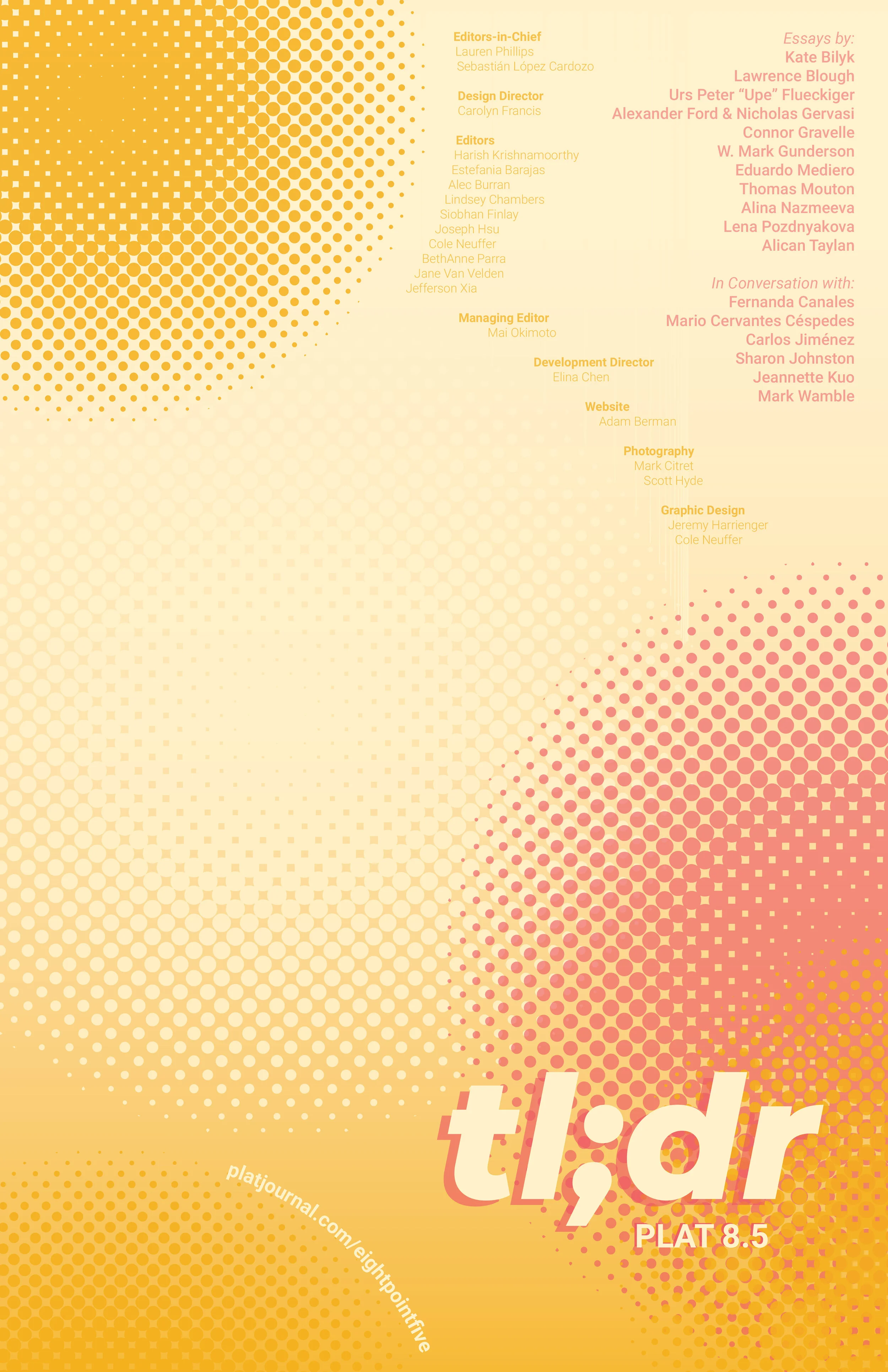
PLAT 8.5 tl;dr is presented digitally on our website for free. Use this page to purchase a copy of the promotional poster. The poster is double-sided and measures approximately 16.5” x 10.5”.
PLAT 8.0 makes a case for simplicity in architecture—not as a style, but as a navigational tool by which we can chart our course through the infinitely demanding and complex topography of our cultural landscape. The 30+ contributions in Simplicity form a mature and coherent conversation about the timely (even urgent) topic of simplicity in architecture as a design posture; an attitude toward process that fosters pragmatism and clarity in the built environment.
Tasked with responding to PLAT 8.0 Simplicity, we were struck by the notion of simplicity as a tool— that is, something possessed, able to be applied to a purpose—rather than as a point on a continuum shared by varying degrees of complexity. As such, simplicity may be understood to be a quality within ourselves that we can direct outward as a means of “editing” our surroundings.
And yet simplicity, even as a tool, carries with it its own set of hazards and pitfalls. As a differential, dis-integrative process, it runs an inherent risk—of over-editing, over-thinking, and of course, over simplifying. Moreover, once simplicity is identified as a desirable outcome, it is all too tempting to jump ahead to a predetermined aesthetic result—perhaps jettisoning critical meaning along with superfluous information. In the spirit of gamely owning up to simplicity’s limitations, we announce PLAT 8.5 tl;dr.
tl;dr (editorial shorthand for “too long; didn’t read”) is used to connote excessive verbosity, but in such a way as to stave off information overload from a safe distance. The term projects a desire for simplicity, but in its unconsidered form. And it is used, all too often, to stifle discourse and collaboration.
We are glad to borrow this term (with all its baggage and snark) as a way of introducing a series of serious conversations about the commensurate and integrative process that necessarily follows quickly behind simplicity’s culling, editing, and cropping. To bring the simple idea forth—to share it, to put it back into the world of things—requires a near-simultaneity of development, refinement, and articulation. As unnecessary intertextual connections are discarded, so the opportunities for considered connection arise from the iterative transformations of a simple idea.
PLAT 8.5 tl;dr invites a further exploration of how the toolbox of simplicity can be carried through the process of bringing an idea into the built environment. Inevitably, we find that the path to execution is complicated by turbulence, as the inconveniences of the world around us seek to encroach and impede. Crises of mechanics, politics, and economics can make it difficult to hold on to clarity of concept. And yet for many of us, guiding a design from its simple inception into being remains the most satisfying and compelling work we do.
PLAT 8.5 tl;dr presents a series of conversations, interviews, articles, and design work that engage directly with the challenges of bringing a simple idea through the process of refinement and articulation that results in a work—of architecture, design, writing, or art.
Editors-in-Chief: Lauren Phillips & Sebastian López Cardozo
Design Director: Carolyn Francis
Managing Editor: Mai Okimoto
Development Director: Elina Chen
Website: Adam Berman
Photography: Mark Citret, Scott Hyde
Graphic Design: Jeremy Harrienger, Cole Neuffer
Lead Copy Editor: Harish Krishnamoorthy
Editors: Estefania Barajas, Alec Burran, Lindsey Chambers, Siobhan Finlay, Joseph Hsu,Cole Neuffer, BethAnne Parra, Jane Van Velden, Jefferson Xia

PLAT 8.0 Simplicity
///
What We Talk About When We Talk About Simplicity
‘Simple’ must be one of the most overworked words in the architectural vocabulary. —Adrian Forty
129. The aspects of things that are most important for us are hidden because of their simplicity and familiarity. (One is unable to notice something—because it is always before one's eyes.) The real foundations of [one’s] enquiry do not strike a [person] at all. Unless that fact has at some time struck [them].—And this means: we fail to be struck by what, once seen, is most striking and most powerful. —Ludwig Wittgenstein
Luxury in architecture is not extravagance, rather it is simplicity. —Kosme de Barañano, writing about John Pawson
The theme of this issue is simplicity. Following Forty, we know simple to be played out, nearly meaningless at this point. Yet between the Wittgenstein quote and the Pawson-inspired one lies a realization: That simplicity hides important things, and these important things might be what give architecture its texture, its mystery, its joy. It also proposes pragmatism and the reconstitution of constraint as an opportunity for design, not its elimination. Yet the appearance of simplicity may also cloak movements of power or conceal malaise. We’d prefer not to think about simplicity as a kind of indifference, as that sounds like escapism or unconscious privilege, nor as a rationale for a reversion to tradition, as such a return is not possible. We are less interested in simplicity as a representational style, though we admit we enjoy how it looks some of the time. Instead, we’re interested in how simplicity operates in formulating design processes and in making and encountering built work in the world—we’re in search of overarching cultural aims and underlying conceptual threads.
We’re dreaming about a method that allows us to be more direct and more effective at the speeds required for life today. Like many before us who have meditated on simplicity, we believe that this quality remains essential in our post-everything paradigm. Simplicity is editing, is sorting, is cropping, is a tasteful leaving out. Simplicity is not the opposite of complexity but its navigational device. In the wildernesses of complexity, simplicity is a compass that guides the way—towards what is up to the adventurer. We situate our declarations in potentiality as this open-endedness is what makes the term so useful; its ambiguity clears a space for speculation.
The collection of articles, projects, and images in this issue of PLAT operates in this clearing. Our contributors explore simplicity in a variety of historical and contemporary instances. Subjects range from normalizations of digital tools to inattention and climate change, gaps in images and realities, building materials of past and present, modernism and bureaucratic scientification, and the anxieties of excess. Also included are a handful of offices working through their ideas and images. Finally, the issue is organized as a kind of mirror and at its center is another book, Il fera beau demain by Anne Lacaton and Jean Philippe Vassal, originally published in 1995, included here because of its relevance to the subject and inspirational beauty.
Surely simplicity forces questions about meaning. When Mary Oliver asks “what is it you plan to do / with your one wild and precious life?” the answer shouldn’t be a long convoluted response; intention is an arrow that flies swiftly. But we’re not here to deliver answers—an answer to a question like this takes a lifetime to wrestle with—or even to assume that there is an answer, but only to gather the questions posed by others, in the hope that their collective sharpness is stirring.
The work assembled here is diverse in its inquiries and approaches. There are declarations, essays, explorations, reviews, histories, conversations, photographs, images—even architectures. These items are evidence that when you take simplicity in architecture as a framework, lots of strange things happen, in a good way. We hope they are useful to you as you make your way in the world.
Editors-in-Chief: Jack Murphy & Tiffany Xu
Graphics Director: Carolyn Francis
Development Director: Matthew Ragazzo
With contributions from Luigiemanuele Amabile, James Amicone, APRDELESP, John Capen Brough, Galo Canizares, Ryan Carl, Jimmy Carter, Kyle Chayka, Thomas Daniell, Davies Toews, Lauren Dean & Daniel Lazo, Nicholas Elliott, Frida Escobedo & Jesus Vassallo, Fala Atelier, Liz Galvez, Monica Hutton, Carla Juacaba & Fernanda Carlovich, Dylan Krueger, Anne Lacaton & Jean Philippe Vassal, Suzanne Lettieri, Emma MacDonald, Ajay Manthripragada, Mario Matamoros, Mary McLeod, Amelyn Ng, Janet Ni, Albert Pope, Wonne Ickx/PRODUCTORA, Davis Richardson, Chris Norton Riley, Tithi Sanyal, David Nunes Solomon, Anderson Todd, Yasmin Vobis & Aaron Forrest/Ultramoderne, Sarah Whiting, Leticia Wouk Almino.
320 pages, published Fall 2019.
If you encounter any issues during checkout, please email us: editor@platjournal.com.
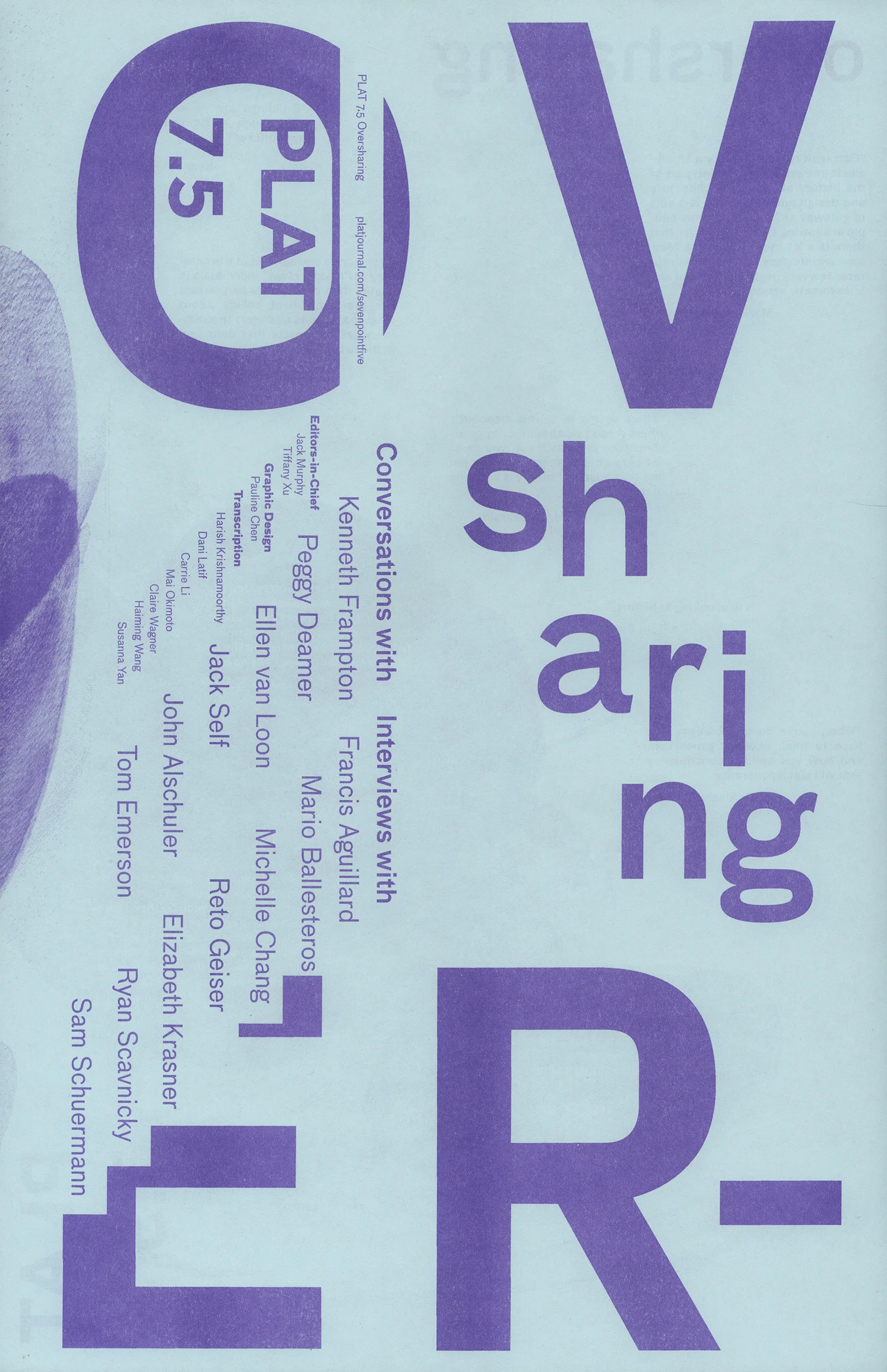
PLAT 7.5 Oversharing
For the first time, this .5 issue of PLAT is presented digitally on our website for free. See below for links to individual pieces.
A promotional risograph poster advertises the issue. It was printed in New Orleans by Erik Kiesewetter of Constance. The poster is double-sided and measures approximately 16.5” x 10.5”.
Use this page to purchase a copy of the promotional poster. All of the content can be found at the links below or using the Articles section of the website.
Oversharing: A Transitional Manifesto
Conversations with: Kenneth Frampton, Peggy Deamer, Jack Self, John Alschuler, and Tom Emerson
Interviews with: Mario Ballesteros, Michelle Chang, Reto Geiser, Elizabeth Krasner, Ryan Scavnicky, and Francis Aguillard & Sam Schuermann
Editors-in-Chief: Jack Murphy & Tiffany Xu
Managing Editor: Matthew Ragazzo
Graphic Design: Pauline Chen
Transcription: Harish Krishnamoorthy, Dani Latif, Carrie Li, Mai Okimoto, Claire Wagner, Haiming Wang, and Susanna Yan
Published February 2019.
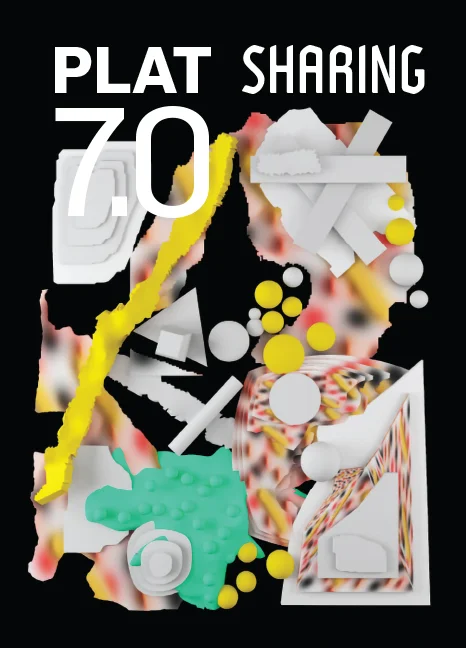
We had second thoughts about SHARING. We were tempted by more than a few edgier themes: Platform, Exigent Extraction, Hard Softwares, Smart, and so on. Nevertheless, we stuck to our guns and decided to dissect the topic by casting a wide net. As far as we can tell the nature of contemporary sharing started to become contested roughly a decade ago, proceeds today with fervor, and continues to benefit from a direct engagement with architecture and vice versa.
The cover of this issue was created by Amsterdam-based The Rodina and attempts to convey the dangerously cute nature of sharing. Sometimes you want to pet it, but at any moment it might bite you. We justified the breadth of this issue by aiming to provide you, the reader, with many ideas, ultimately allowing you to decide what you think of sharing. Yet, we have no illusions of being impartial arbiters of this discourse. We come with a significant amount of biases, including believing that thinking deeply requires continually adapting responses and techniques. As such, we sought out formats like the interview, which we liked for its ability to generate content rapidly, thus helping us to take the pulse of the current state of affairs.
Constructing a new definition of sharing requires a desire to see things as they have yet to be seen. Several pieces within this journal deal with the fundamental shifts of the image itself, arguing that old canon may be increasingly challenged by the technology of contemporary making. Other pieces follow in a tradition of attempting to ground the internet and the digital in tangible spatial practices: dock-less bike share, DIY internet receptors and transmitters, and the furniture and wares of everyday life.
The journal is interdisciplinary, which we view as inevitable more than intentional, and we hope architects and non-architects alike will enjoy the ensuing pages. Five loose clusters exist in this issue and attempt to establish a general framework for understanding emergent themes. Three of them, “Sharing with Friends,” “The Ether in the Everyday,” and “Imaging the Image,” were already alluded to. The other two clusters are titled “Building Sharing” and “Make it Macro” and speak to how architects are manifesting sharing in their projects and how notions of sharing play out at a macro scale, respectively. If James Scott helped us see like a state, then Guillermo Fernández-Abascal and Urtzi Grau help us see like a car, while Ali Fard takes a deep dive into Amazon’s HQ2 competition and Charles Weak lends a new perspective on transparency.
Many of the contributors included their Instagram handles in their bios, which was a deliberate effort on our part to manifest today’s shifting landscape of production and reproduction, digital and otherwise, in the process of architectural publishing itself. Thus, the print medium, including this SHARING issue, is valuable insofar as it enriches our inevitably digital lives and generates conversation that transcends these pages, and perhaps even our phones.
Editors-in-Chief: Francis Aguillard & Samantha Schuermann
Managing Editor: Mona Elamin
With contributions from Caroline Acheatel, Laura Salazar Altobelli, Caio Barboza,@ashleymbigham, Emma Benintende, @scaleful, Aron Chang, Josh Conrad, @rodrubq, @p_trixiye,@phillipdenny, @_fastSlim, @aliffard, Guillermo Fernández-Abascal, @samtous, Urtzi Grau, @thalamka, Jacqueline Hall, Munjer Hashim, @erikherrmann, Sarah Hirschman, André Paul Jáuregui, @aliroseisuppose, Andrew Kovacs, @ohyun.kwon, @jeff.kruth, @taleliu, @brendilw, @piergianna, Forrest Meggers, @ngmeister, @davis.s.owen, @micahpiven, Ioana Petkova, Jessica Reynolds, Ryan Roark, @danjoroche, @sarod718, @everyverything, Sofia Blanco Santos, @aschifani, Sebastian Schmidt, @giddss, Rafi Segal, @j_self, @schmoron13, @pink__tank, @iffysoso, Alexandra Stokes, @tjsuomala, @t_e_a_m_b, @lexitsien, Mark Wasiuta, @charles_weak, @benjamin_wells, Wanqing Wong, & Nitzan Zilberman.
Published Fall 2018.

In our current day and age of spectacle and excess, PLAT 6.0 Absence aims to offer a moment of pause and shift our focus to the quiet, unseen, unnoticed, and rare. This issue of PLAT constructs a nuanced reading of our discipline, arguing that the constant historizations and theorizations of the ‘built’ may have left ‘absence’ undertheorized. Whether tired, bored of, or in an attempt to escape what is constantly there, the editors and contributors of this issue are seduced by absence. Absence is used as a tool to see the world extraordinarily and re-evaluate the “present.” Perhaps it is a simple play of our prefixes: what is unseen is reseen; the deconstructed reconstructed; the indeterminate redetermined; and so on. The collection of work in this issue conveys the range of readings that arise from a word, arguing that, both semantically and derivatively, absence's meaning is manifold. Whether it is through focusing on absence as a physical, social, psychological, economic, destructive, or uncertain entity, the contributors of this issue unwittingly weave together to showcase the superfluity of interpretation.
Editor-in-Chief: Melis Ugurlu
Managing Editor: Rachel Grady
With contributions from Daniel Abramson, Francis Aguillard, Michael Allen, Ryan Barney, Christian Bjone, Michelle Chang, Gina Ciancone, Alexander Colson, Chuck Diep, Laurent Dubuis, Will Fu, Vladimir Gintoff, Hasan Hachem, Drew Heller, Carlos Jiménez, Patrick Stowe Jones, Moritz Kasper, Nicole Kengyel, Joel Kerner, Jedy Lau, Rosalie Laurin, Stephanie Kyuyong Lee, Lluís Juan Liñán, Kobi Logendrarajah, Marija Marić, Kevin Pazik, Dillon Pranger, Curtis Roth, Bertrand Rougier, François Sabourin, Gioia C. Sawaya, Akshita Sivakumar, Daniel Springer, Micah Stanek, Alexandra Trianti, Benjamin Vanmuysen, Youngjin Yi, and Linda Zhang.
Published Spring 2017.
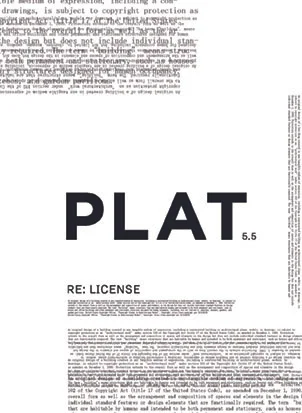
Responding to the legacy of PLAT’s half-issue format, Re: License is invigorated by the question “What does it mean to create discourse around and through a journal?” and serves as a direct response to its preceding issue, 5.0 License. Re: License presents a retrospective look on both License and the history of PLAT on a whole. In curating response, this issue capitalizes on conversation as a medium to capture response, reflecting the way in which Rice Architecture engages in the architectural discourse. Defining conversation as an uncertain, unknown, and incomplete activity, PLAT 5.5 treats License as an open conversation and continues it through capturing reaction, review, and judgment. The past editors returned to share their reflections on the process of making their issue; the contributors of 5.0 critiqued their varied interpretations of license and contemplated on the common threads of their submissions; and current faculty, students, and visitors at Rice discussed the topic and its tangents, such as authorship, copyright, influence, fakes, etc. further. PLAT 5.5 Re: License acts as a curator, mediator, and historian all at once.
Editor-in-Chief: Melis Ugurlu
Managing Editor: Rachel Grady
With contributions from Francis Aguillard, Gavin Brown, Galo Canizares, Hillary Davlin, Eli Keller, David Kennedy, Yu Kono, Lluís Juan Liñán, Andy Lockyer, Kalen McNamara, Ana Miljački, Benjamin Peek, David Rader, Dylan Rinda, Sam Stewart-Halevy, and NCARB Support.
Published Spring 2017.
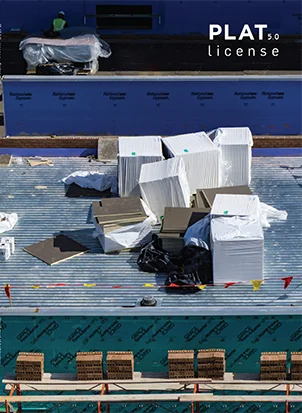
PLAT 5.0 is interested in the duality of license, its concomitant responsibilities and liabilities. License is, on the one hand, the certification of one's ability to conform to legal and social code, but, on the other hand, the freedom to disregard those exact same requirements, with unexpected and even undesirable results. Given the role of architecture as a highly regulated profession, which requires licensure as a barrier to entry, and the role of the architect/designer to constantly poke at the defined edges of the field, how can this polemical condition be leveraged to fulfill both roles? PLAT 5.0 seeks to explore the boundaries of all the implications of license to shed light on the unknown fringes of agency in practice and pedagogy.
Editors-in-Chief: Kalen McNamara & Dylan Rinda
Managing Editor: Nathan Keibler
With contributions from Gavin Brown, Galo Canizares, Tei Carpenter, Eli Keller, David Kennedy and Benjamin Peek, Andy Lockyer, Sarah Oppenheimer, Samuel Stewart-Halevy and Louie Weiss.
Published Spring 2016.
As a measure of periodic oscillation, FREQUENCY suggests that we tune in into the relative rates of change surrounding architecture. Architectural materials, effects, and concepts all have a duration. To practice with frequency is to act as a receiver of cultural signals, and to look for ways to resonate or interfere with prevailing trends. Whether through an emphasis on duration, impermanence, or programmatic flexibility, the work collected here tests architecture's performance as a time-based medium.
Editor-in-Chief: Amelia Hazinksi
Managing Editor: David Richmond
With contributions from Lucia Allais, Neeraj Bhatia, William Trotty, Zachary Morrison, Neyran Turan, Erez Golani Solomon, Jérôme Becker, Lukas Vejnik, Florian Sammer, Michael Waldrep, Bomin Park, Peter Stone, Atelier Bow-Wow, Jesús Vassallo, Hans Ulrich Obrist, and David Dewane.
Published Spring 2015.
Architects take a curiously privileged stance in relation to mass culture: Architecture's engagement with the Vitruvian principles of commodity and delight are not without a theoretical backbone that elevates the discipline above its cultural context. Since modernism, however, architects have hesitated to effectively engage the broader cultural realities of their work's reception. With PLAT 4.0, we hope to chart a territory for architecture within mass culture—that endless cocktail hour where fashion, politics, cartoons, economy, and sitcoms mingle.
Editors-in-Chief: Sasha Plotnikova & Kerim Miskavi
Managing Editor: Patrick Daurio
With contributions from Joseph Altshuler, Pier Vittorio Aureli, McLain Clutter, Greg Corso, Cosmo Design Factory, David Dewane, John Habraken, Jordan Hicks, Lucía Jalón Oyarzun, Albert Pope, Joseph Scherer, Erin Ruhl, Pyline Tangsuvanich, De Peter Yi, and Anthony Yue.
Published Fall 2014.
PLAT 3.5 advocates for misbehavior. Foregrounding projects, essays, drawings, and interviews that lay the groundwork for a model of misbehavior, this issue exposes the potentials of playfully breaking the rules. These models, by operating within disciplinary structures while rethinking the accepted disciplinary conventions associated with them, illustrates how insiders can reconstruct our contexts into something simultaneously strange and familiar, and do so while laughing about it.
With contributions from Grant Alford, Jennifer Bonner, Revital Cohen and Tuur Van Balen, Neil M. Denari, Eunike, Michael Ezban, Mark Faulkner, Jonathan Gayomali, Xaveer De Geyter, Dan Hesketh, Joshuah Howard, Rem Koolhaas, Éva Le Roi, Jonathan Louie, Jonathan Nadel, Ryan Ramirez, Charles Renfro, Lilit Ustayan, Enrique Walker, Duncan White, and Chi Zhang.
Published Fall 2013.
In this issue we are not interested in extremity; rather, we have an interest in intensifying the instant. We derive agency from urgency. Rapid changes in topography, geography , and movement produce new territories for architecture, extending the potentials of the instant to make lasting change. The crisis event acts as a catalyst for an emergent future, but in fact, the tragedy or shock of architecture has been here all along.
Editors-in-Chief: Mary Casper & Chimaobi Izeogu
Managing Editor: Sean Billy Kizy
With contributions by: Matthieu Bain, Sam Biroscak, Jordan Carver, Michael Collins, Sean Corriel, Alexander D'Hooghe, Tucker Douglas, Vy Drouin-Le, Christina Gray, Brandon Hall, Kate Hayes, Fumio Hirakawa, Lisa Hirmer, Michael Hirschbichler, Eric Ho, Chris Holzwart, Christoph Ibele, Sean Billy Kizy, Charles Lai, Rick Lam, Brian Lee, Sofie Lemos, Evan Litvin, Sara Lum, Michael Matthews, Jared Edgar McKnight, Lea Oxenhandler, Julián Palacio, Andrew Perkins, Bryony Roberts, Curtis Roth, Matthew Seibert, Regina Teng, Marina Topunova, Dustin Valen, Brian Vargo, & Kathy Velikov.
Published Spring 2013.
The essays and manifestos of PLAT 2.5 assert that architecture will always be produced by people exercising unique bias, with experiences that unavoidably shape their interests and predilections. The way an architect represents his or her experience, and the way in which others see and rewrite that experience impacts the architectural work and provides a fresh way forward for architectural thinking.
Editors-in-Chief: Mary Casper & Chimaobi Izeogu
Managing Editor: Sean Billy Kizy
With contributions from Philip Ursprung, Nana Last, Perry Kulper, Javier Arbona, Adriaan Geuze, Rakia Seaborn, Sylvia Lavin, Brett Steele, Peter Muessig, Livia Corona, and Johnston Marklee.
Published Fall 2012.
PLAT 2.0 illuminates the cultural, political, and social milieu in which architecture operates, as well as the agendas it pursues, through critical analysis and playful subversion of the potentials and limits of representation.
Editors-in-Chief: Joseph Scherer & Eileen Witte
Managing Editor: Erin Baer
With contributions from Jansen Aui, Michael Banman, Jonathan Crisman, Jessica Cronstein, David Dewane, Branden R. Engel, Stewart Hickes, Thomas Hiller, Andreas Kalpakci, Marcin Kedzior, Dimitri Kim, Michael Maltzan, Jonathan Massey, David Rinehart, Jessica Rossi-Mastracci, John J. May, Charlie Morris, Jack Murphy, Allison Newmeyer, Jeongsun Oh, Antione Picon, Noam Shoked, Carolyn Sponza, Jimmy Stamp, Alex Tehranian, James Witherspoon, & Robert Yuen.
Published Spring 2012.
The essays, projects, and interviews collected in PLAT 1.5 comprise the first volume of a two-part investigation into the current state of architectural representation. In this issue we explore this territory in an effort to uncover new insights into the relationship between technology and design processes. The evolution of our tools and techniques changes not only how we draw, but what we draw, and this impact demands critical assessment. As designers, how do we engage these developments? How can we take advantage of these contemporary reconfigurations, and to what degree should we remain suspicious?
Editors-in-Chief: Joseph Scherer & Eileen Witte
Managing Editor: Erin Baer
With contributions from Curime Batliner, Brandon Clifford, Alex Cornelius, Eunike, Victoria Goldstein, Jared Haggens, Lindsay Howe, Dustin Tobias, Garrett Jones, Brandon Kruysman, Wei-Han Vivian Lee, Rodrigo Lima, CJ MacQuarrie, Michael Maltzan, John J. May, Mathias Neuman, Antoine Picon, Jonathan Proto, Dimitrie Ştefanescu, James Michael Tate, Jana VanderGoot, Michael Vlasopolous, & Louie Weiss.
Published Fall 2011.
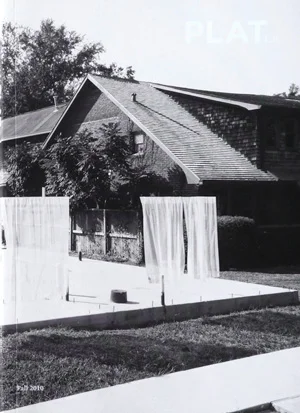
Through essays, projects, drawings and interviews PLAT 1.0 interrogates notions real and fake, tracing the impostor through its manifestations from character to practice. What is it about the character of the impostor that applies to architecture, both in practice and form? Behind the impostor's artful disguise is a space of innovation. The elegant crimes of the impostor can serve as provocations for architecture, moving the discipline beyond the boundaries of convention. PLAT 1.0 invites you to stop worrying and learn to love the impostor.
Editors-in-Chief: Seanna Walsh & Marti Gottsch
Managing Editor: Edward Baer
With contributions from Seanna Walsh, Marti Gottsch, Edward Baer, Giorgio Angelini, Mary Ellen Carroll, Justin Smith, Penelope Boyer, Dustin Tobias, Shota Ishii, Margaret Maile Petty, Kate Morgan, Dustin Valen, Sara Hieb, Tracy Bremer, Justin Brammer, Albert Pope, Troy Schaum, Moira Henry, Kyle Miller, Jack Brough, Jessie Cronstein, & Matthew Austin.
Published Fall 2010.
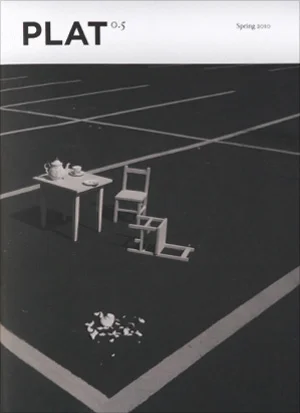
The inaugural issue of PLAT sets out to establish a publication that could be at once rigorous and loose. As a platform for the students of Rice University, PLAT 0.5 is a recombination of work 'from the margins' of architectural projects, born from a desire to crystallize salient but often forgotten moments in our lives and labors as architecture students. The title was chosen for its implications of framing a territory: to plat a neighborhood is a common practice even today in the vast spaces of Texas. To us this was fascinating.
With contributions by: Jessica Cronstein, Alberto Govela, David Dewane, R. Elliot Katz, Curt Gambetta, Ned Dodington, Francois Roche, Melissa McDonnell, Neyran Turan, Annika Miller, Rachel Dewane, Jessica Tankard, Sam Ray Jacobson, & Lars Lerup.
Published Spring 2010.

Architecture does not simply circulate in images; it circulates within an economy that rewards speed, legibility, and compliance, quietly aligning formal production with dominant structures of power. The paralysis that accompanies a lack of clarity risks naturalizing the very systems that shape what can be built, funded, and seen. Instead of chasing ever-sharper images, we might linger in the haze produced by digital repetition and ask what forms of attention it forecloses. Resolution, then, is not merely a narrative endpoint or an index of optical fidelity, but a decision about how and where to fix meaning within a fluid field of references. To resolve is to determine, even if for a moment, what counts and what remains peripheral. When understood as determination rather than representation or conclusion, resolution shifts architecture away from photogenic coherence and toward experiential and tectonic negotiation, where agency can begin to register. Resolution thus emerges not as a final synthesis but as a strategic pause—a temporary alignment that resists merely looking by keeping architecture open to seeing again.
In this issue of PLAT, contributors move across these unresolved conditions, attending to the built and the perceived, the material and the mediated, and reasserting the agency of perception itself. They question the regimes of representation and presentation that structure what becomes visible, and what remains underrepresented within the discipline. Taken together, these projects do not propose a single corrective, but ask after the status quo that has come to feel naturalized, the zeitgeist of the disciplinary epidermis that has emerged without deliberate choice. They search for ways to dissolve the opacity of the discipline’s boundaries as contributors, or to probe them externally to examine the resolution within.
With contributions from:
Igor Marjanović—On the Optics and Politics of Resolutions
Maxwell Stith & Chuanjie “Jayden” Yan—Repetition and Resolution
Sophia Haewon Lee—Some Funny Images
Juchen Zhang—6 × 6
Lulu Crouzet—Paper Space(mis)translations
Brendon Carlin & María Páez González—When InfrastructureBecomes Architecture
Clara Rummer—Shooting Architecturein a Post-Digital Age
Motomi Matsubara—Fillet is More Than aCorner Problem!
HONMI, Namhi Kwun & Bryan Honting Wong—Hungry Ghosts: Forms of Belief and Belief in Forms
Samantha Ong—Recognizing My Bed
Jyah Flam—Chicken Coop Rhapsody
Mingxuan Wei—Analog Aesthetic
Jono Coles—Mock Mock-ups
Carrie Gammell—The American Resolution
Joseph Hsu—Two Hanses
Eric Kyle Cheung & Andrea Machado Romero—The Chronic Loss of Interpretation
Filipe Magalhães, fala—Violent Photographs, Frontal Drawings, and Exploded Negatives (or How Paper Covers Rock)
Ezabel Zhou—Machine-Eyed Person
Team: Maxwell Stith & Chuanjie (Jayden) Yan, Abby Chen, Deniz Kantar, Tianai Duan, Yousif Giyo, Musab Salah, Ghazal Torkamaniha, Sophie Valbrune, Zhan (Michael) Zhong, Mingru Han, Prea Davis, William Yiming Liu, Osvaldo Salgado, Whitney Walden, Moxuan (Grace) Xu, Kirstie Qian.
200 pages, published Spring 2026.
If you encounter any issues during checkout, please email us: editor@platjournal.com.